
Learning at another level
A reminder to stay curious…

One of the parts of scuba diving that I’ve always loved is learning more about what lives in our oceans, but in recent years I’ve been discovering how much you can learn and see without really having to get wet.
Last weekend was a case in point. Myself and Lou drove to Harwich in Essex for the Seasearch conference. We’d seen the outline agenda, which involved some interesting talks about everything from crustacean ID to plankton.
There were also intertidal surveys pencilled in to coincide with the low tides. As I’ve become more involved with Seasearch I’ve found the community and knowledge held within it astounding.
And everyone shares that knowledge so generously. Last weekend was no exception. Over the course of two days, I learnt a lot more about how to ID different species – crustaceans, molluscs, cuttlefish – as well as being taught a tonne about plankton.
Who knew you could distinguish a barnacle larva by the way it moves?! (They behave like they’re headbanging at a rock concert, in case you were wondering. Seems fair to me given that they spend their whole adult lives with their heads stuck to a rock).
There were microscopes. There were a lot of ID books. And there were a lot of very knowledgeable people sharing what they knew.
Seeing beneath the surface without getting wet
My personal favourite part were the two intertidal surveys. The first was on a vast expanse of rocky/muddy ground on the edge of the estuary that was home to a lot of fascinating life – it also gave us a chance to put our crustacean ID to the test.
One of the joys of intertidal surveys is that you can easily talk to the other people you’re with. That means you can learn more quickly because you’ve got someone pointing out the features on a crab or mollusc while you’re looking at it, rather than retrospectively.
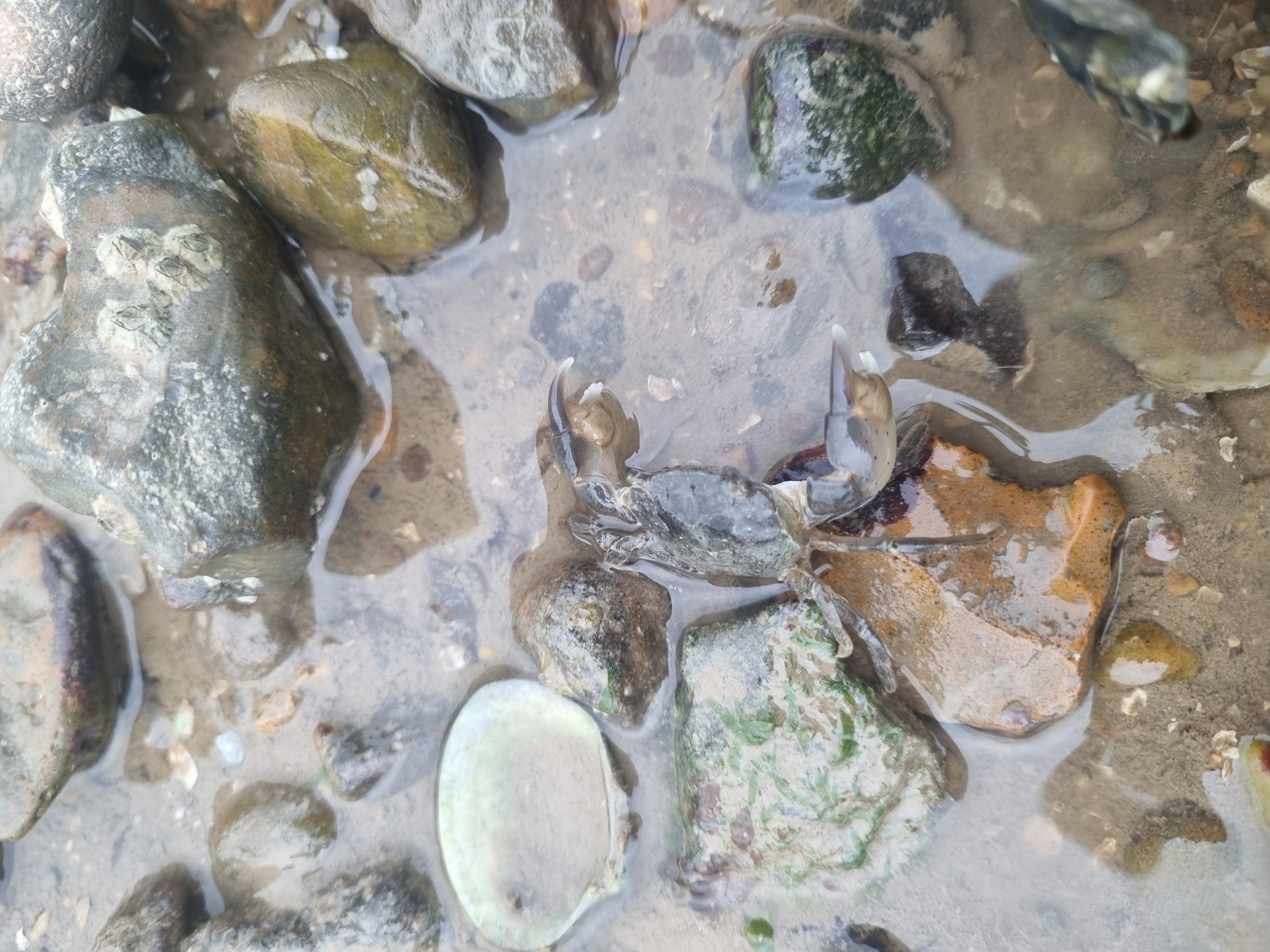
We found a lot of brush-clawed crabs in this habitat – an invasive species and therefore important to record. Adult males are easy to distinguish because of the “brush” in their claws. Juveniles don’t have the characteristic brush though, so you’re looking at other features like the shape of the carapace and the spotted pattern on the claws.
But the survey that I really loved was on Sunday.
The sky was threatening rain as we headed out to the boating lake – a large pool fed by the sea but located in the middle of a park. When we arrived, I wasn’t hopeful we’d see all that much.
I was very wrong.
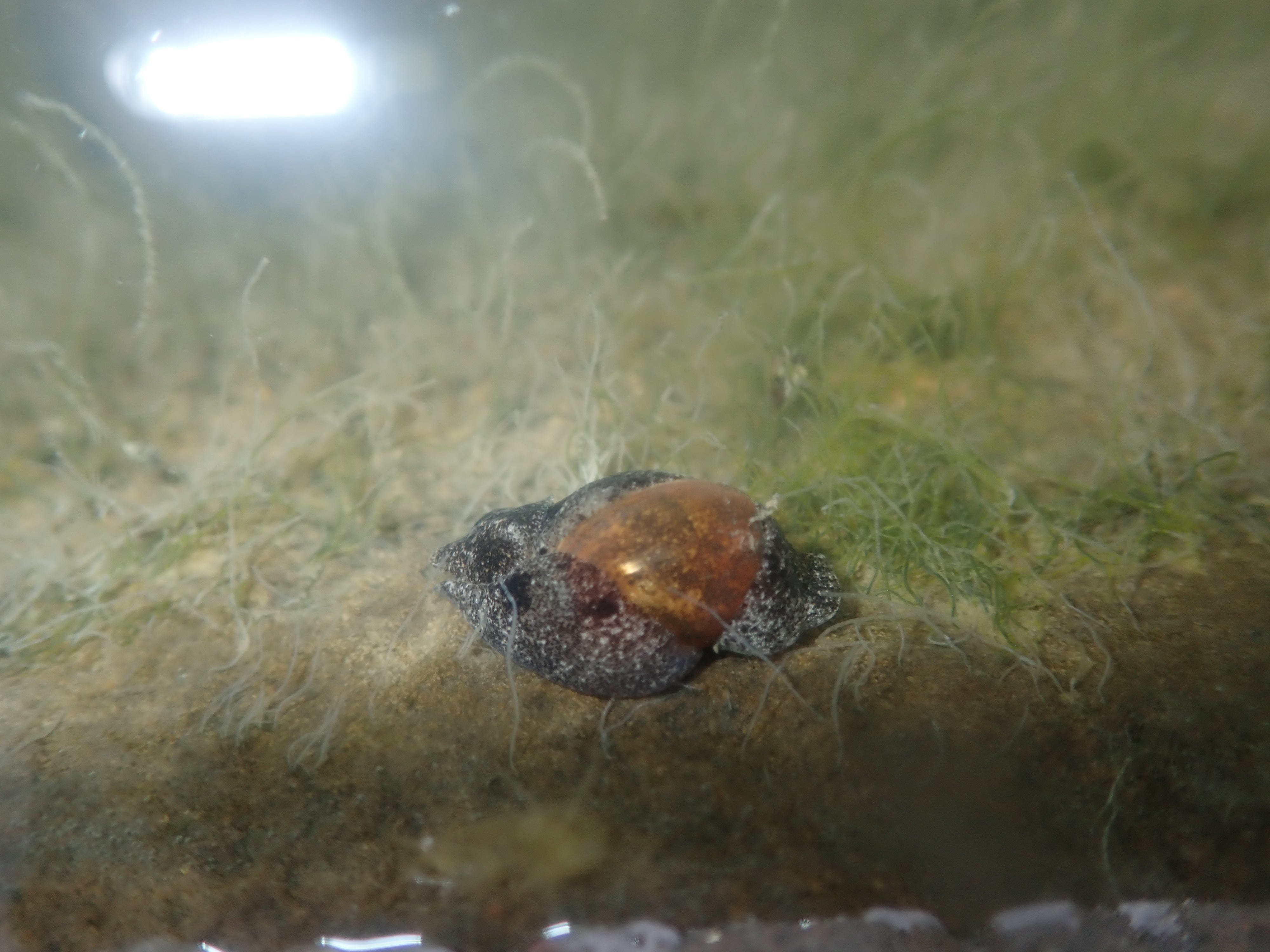
Within five minutes, we’d found a sea slug – Haminoea navicula. This is a type of sacoglossan slug that still has a partial shell. After spotting one and getting excited, we quickly realised there were a lot more.
As we moved around the edge, so many more creatures appeared – shrimp, isopods, amphipods, fish. All darting about in among the green weed that clung to the sides and trailed up from the bottom of the pool.
The more I looked, the more I saw. Tiny anemones with vibrant orange stripes down their sides – another invasive species (Diadumene lineata) – balls of eggs laid by the sea slugs. So much life in an area that I would never have considered looking in prior to this weekend.
It was a great reminder that our preconceptions can stop us looking in the first place. They kill curiosity and as a result we can miss out on so much.
So, my takeaway from that weekend was to be more curious. To be more open and to look more closely, even in places that I think don’t have much to offer, because I’ll almost certainly be proved wrong.
What a beautiful reminder to slow down and look more closely! Sounds like a lovely weekend of nature and learning.
It was really lovely - I feel very lucky to be part of this community 😊